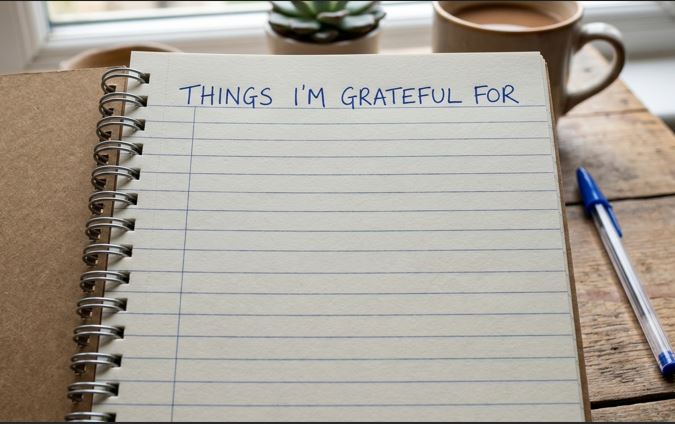
Gratitude… Yes…You know the drill.
Someone suggests journalling, mindfulness, breathing exercises, gratitude practice, positive affirmations, meditation, yoga, drinking water, going outside, touching grass, hugging a tree, or whispering lovingly to your nervous system while eating chia seeds, and immediately a part of the brain responds with: “Nope!”…Not because the idea is terrible, or that it never works. But because human beings are fascinatingly resistant to things that might genuinely help us feel better. Which is deeply inconvenient, frankly.
One of the strange truths about emotional wellbeing is this: the things most likely to calm the nervous system are often the exact things the stressed nervous system resists doing. Especially gratitude!
Because gratitude sounds suspiciously wholesome, and when people are overwhelmed, anxious, angry, grieving, burnt out, or emotionally exhausted, “write down three things you’re grateful for” can feel about as appealing as sticking a fork in your eye.
But resistance to helpful emotional practices is actually very normal.
The Brain Prefers Familiarity Over Happiness
Human brains are not designed primarily to make us happy. They are designed to keep us safe, and the brain often defines ‘safe’ as predictable, familiar and known. Even when the familiar thing is stress, or overthinking, or replaying an emotional drama at 2am that occurred in 2009!
The nervous system becomes accustomed to certain emotional states. Over time, anxiety, criticism, hypervigilance, worry, or emotional numbness can start feeling oddly normal.
So when we suddenly try to introduce gratitude, calm, stillness, self-compassion, or emotional softness, part of the brain can interpret it as: “Hmm. This is unfamiliar. This is therefore potentially suspicious.”
From an evolutionary perspective, brains are naturally wired to notice problems more than pleasures. Our ancestors survived because they remembered: ‘Dangerous tiger near river’ not ‘Oooh, weren’t the clouds lovely today’. The brain is constantly scanning for threats to keep you safe.
Gratitude practices help you gently retrain your attention to things that feel good. They feel unnatural and therefore uncomfortable because it’s your natural instinct to notice what’s wrong (for survival), rather than what’s right and fun and awesome and beautiful.
But, in pushing through the urge to resist this practice, you may just find yourself noticing that the coffee tasted great today, or you enjoyed hearing your children laugh, or that you successfully dodged the rain on your walk to the office.
So if gratitude, rest, stillness, self-kindness, or emotional openness feel uncomfortable, it simply means your nervous system is learning a different way to exist… And nervous systems, much like cats and toddlers, do not always enjoy change immediately.